AI

IT support and services

Technology Analysis of Major Companies in 2026 How AI Apps and On Demand Solutions Are Driving Growth

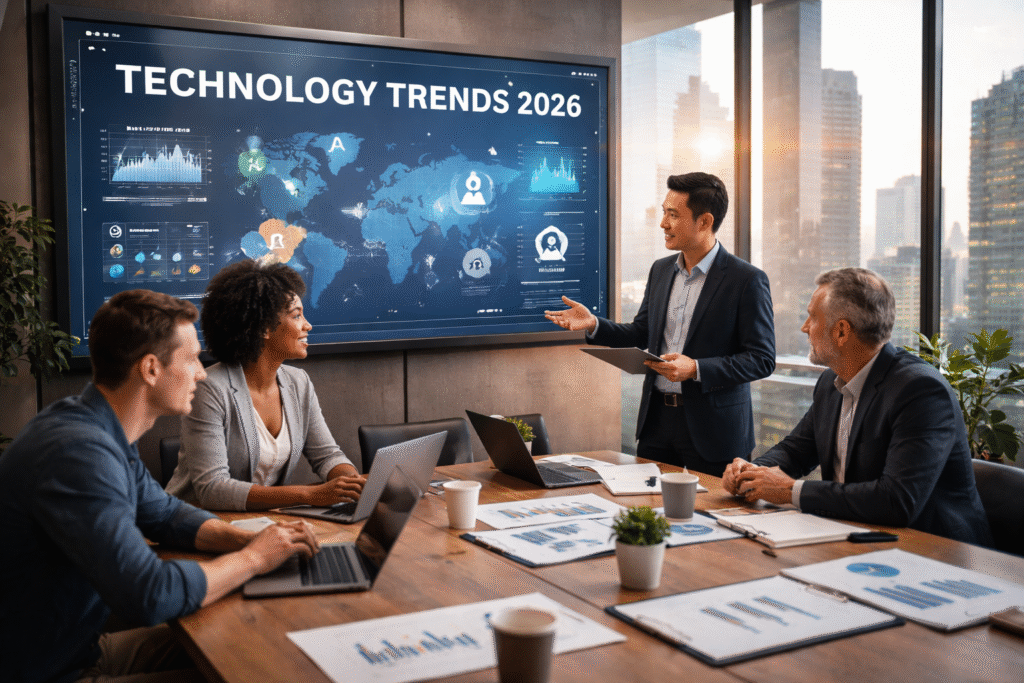
  In 2026, whereas technology once only supported businesses, it is driving business growth. From startups to Multinational Corporations (MNCs), they all utilize technology such as AI, mobile application development and on-demand services to grow at an exponential rate and maintain maturity levels. The large companies that can change how they work digitally are using new technologies to improve their customers’ experiences, increase productivity, and change their ability to perform and deliver what they do. Understanding in what way different technological advances work together can help all businesses find ways to move through the competitive market effectively. AI in the Workplace & Automation Artificial Intelligent (AI) Business Solutions (s) are an important component of company development, utilizing AI Automation (s) to enhance decision-making, to streamline manual processes, & to enhance customer experiences. Common applications for an organizations use of AI are: customer service automation, predictive analytics, and personalization. Businesses track user activity to provide more relevant items to potential customers, resulting in increased customer engagement and conversion rates. AI in Cybersecurity and AI-Based Solutions (s) will also benefit organizations by reducing the potential for data loss through improved governance of data storage and faster detection of potential threats. This is why AI is now a fundamental component within the IT consulting and services industry. Consumer applications play an important part in how companies interact with their consumers through mobile application development. Consumer mobile applications have become increasingly smarter (faster) and more user friendly. Due to increased investments in app innovation and user interface (UI) and user experience (UX), an effective mobile app can build a strong relationship between the business and the user as well as increase user retention.Furthermore, many modern mobile applications are now utilizing artificial intelligence (AI) functionality such as recommendation engines, voice search, and automation; thereby, giving them more significance and utility. Digital Services and On-Demand On-demand digital services are dramatically changing the way in which businesses provide service to customers. With the consistently growing expectation of having access to products on-demand (instantaneously), on-demand applications are growing exponentially. Extensive amounts of companies are developing digital services (commonly referred to as applications) that allow users to schedule, make purchases or obtain access to services in real-time, providing the organization with opportunity for growth while improving the overall satisfaction of their consumers. Many organizations leverage on-demand business models throughout several industries i.e. transportation, food delivery, healthcare, home services, etc. The on-demand shift is significant to digital transformation as we move into the year 2026. Cloud Computing and Solutions for Growth Cloud computing is an important factor in the success of many businesses today, as it enables them to store their data, manage their systems and scale their operations without the requirement of heavy infrastructure. In addition to cloud computing helping companies scale, it also helps improve performance, security and flexibility. Companies using cloud computing are better able to respond to changes in the market and meet increased demand in an efficient manner. Technology Integration and the Growth of Business The greatest asset of many of today’s companies is their ability to integrate a variety of technologies. Through AI, mobile application development and cloud computing can create powerful new systems that can benefit companies globally. As an example, by using mobile application development with AI enabled systems on cloud computing platforms, organisations can offer personalisation to their customers on a large scale.. By using technology together, businesses can become more efficient and reduce costs to generate greater revenues. Technology analysis of leading businesses indicates that those using multiple technologies together grow faster and have better results than those who use only one or two individually. Future Tech Trends for 2026 The future of technology within the business sector is currently being driven by many different trends. One major trend is the increase in usage and capability of AI automation. Another is how consumer app development can improve user experience. Another technology trend today that is most successful is the growth of on demand solutions across a variety of industries. There has also been rapid growth in cloud computing due to an increasing number of companies transitioning from old style ways of doing business to digital. Companies that began implementing these trends early are currently seeing big advantages over their competitors. Summary For 2026 the four biggest areas within technology will include AI mobile applications, cloud computing and demand solutions. Many of the top companies use these tools already, to help them become more effective, provide better customer service and grow rapidly. Companies that have adopted digital transformation initiatives and implemented advanced technology will have more success and will be able to compete on a continued basis within their industry.
Read more
IT support and services

Top AI and Automation Trends Revolutionizing Businesses Today

    By going through this process of automation, companies can also provide a higher level of service for their customers and create more value. Through increased efficiency, organizations can gain a competitive edge over their rivals. Many organizations will continue to invest in intelligent automation as they see the benefits and the ability to leverage the capabilities of intelligent automation. Many organizations will find that as they adopt intelligent automation, they will increase their ability to effectively deliver on their customers’ needs, while providing a greater level of service and value. The Impact of Intelligent Automation on the Workplace The adoption of intelligent automation is already having an impact on the workplace and on how employees perform their jobs. Intelligent automation has become a means for employees to improve their everyday productivity and efficiency. Employees are seeing the positive effects of intelligent automation through better data access, the ability to use valid and reliable data when making decisions, and the ability to dedicate their time and effort on higher-value tasks versus routine and repetitive tasks. Transition to Completely Automated Workflows Companies have progressed from simple automation to complete automated workflows. Welcome to the world of digital, or internet, capabilities – from initial onboarding through to payments and everything in between is becoming completely automated, digitized, and streamlined.The result is that organisations are able to provide their customers with a better experience and their employees with better service by creating a consistent experience across their business, increasing speed by reducing manual processes and improving overall performance. Automated workflows also help eliminate operational bottlenecks and allow for more effective cooperation within organizations. The rapidly evolving nature of customer preferences warrants a fresh approach to using traditional marketing techniques to inform customer relationship management. In order to create relevant and meaningful customer experiences that enhance both engagement and conversion rates, it is necessary for businesses to analyse their customers’ behaviour with respect to their “virtual” interactions with a brand.The availability of vast amounts of data (also known as Big Data) has made it easier than ever for you to analyse your customer relationships and develop personalised customer experiences. Research shows that the more personalisation is applied to a customer experience, the more satisfied the customer is with their overall experience with the brand. Data-Driven Decisions As modern organisations continue to rely heavily on data in their decision-making processes, the ability to create personalised customer experiences through other traditional marketing methods has decreased considerably.. Predictive analytics and advanced analytics are being used by organisations to forecast trends, identify new business opportunities, and reduce business risks. In the past, most businesses took an approach of waiting for a response after they received information. As a result of employing data-driven analytics within their business, businesses are now proactively planning, identifying potential problems, and creating action plans instead of waiting for problems to arise. The outcome is improved business performance, improved efficiency, and a more significant competitive advantage. Automation of Advance Cyber Security More and more companies are looking at how to create strong cyber security systems due to the increase in attacks that companies are facing. This has led to the development of automated cyber security solutions that allow for the detection and response of cyber attacks as they happen. Automated cyber security solutions allow for a greater level of security for a business’ sensitive data, and therefore reduce the risk of a cyber attack. Well established cyber security systems will also build trust and confidence from customers. Collaboration between humans and machines The intent of artifical intelligence systems is to enable all human employees rather than to take over human employees at work. Employees have access to sophisticated tools that assist in the daily operation of a company and facilitate decision-making. The use of intelligent systems in the workplace has increased employee productivity, decreased the number of hours employees work, and is giving employees more time to be innovative and creative. Businesses are benefitting from having a good balance of human expertise and the efficiency of technology. Transformation of Sales and Business in the Digital Market The digital marketplaces are evolving every day, and as businesses are beginning to embrace advanced technologies to improve their ability to connect with customers, simplify the buying experience for customers, and create a seamless experience for customers. Automated responses and smart product suggestions are two key selling points of many businesses, as they improve the way that businesses sell and improve customer satisfaction. Transformation of the way businesses sell is key to the growth of all businesses. Ethical Technology Emphasis As the many facets of technology develop, businesses are more focused than ever on utilizing ethical, compliant practices with respect to data privacy. Today’s operations rely extensively on transparency, security, and compliance. Organizations are utilizing complete and presentable technical solutions to provide customers a credible system in which to place their trust in order to create a strong foundation from which to operate. The responsible use of technology will play an important role in achieving long-term successful operations. Final Remarks AI and automation are transforming and revolutionising how we do business today. Companies that adopt this technology will benefit from a number of competitive advantages; more efficient workflow management, improved customer service and better quality decision-making are some. To remain competitive in the fast changing global business environment, all companies must constantly innovate and utilise new types of technology in their businesses; the companies that can adapt quickly to changing technology with innovative software solutions will be leading the way into the future.

Read more
IT support and services

Mobile App Development’s Growing Significance for Modern Enterprises

  In this day and age of technology, mobile phones have become an integral part of our day-to-day existence (for example, people use their mobile devices to shop, do their banking, communicate, learn & have fun). As mobile device usage continually rises, organizations are concentrating increasingly on developing mobile applications (apps) that allow them to communicate with their customers effectively. An attractive and functional mobile app facilitates companies’ ability to increase customer engagement levels, improve company name awareness & customer experience. No matter if you’re a new business or an established organization, investing in a mobile app is a sound business strategy. What is mobile app important for the company Mobile apps provide constant access to businesses for customers, anywhere and anytime. Rather than relying solely on websites for their customers’ needs, businesses can now meet those customer needs faster and more efficiently through the use of mobile applications. A well-designed mobile app also provides customers with an easier way to search through the company’s product offerings, receive brand notifications/create instant connections to it in almost real-time (such as using a mobile phone), as well as increases user enjoyment and satisfaction and creates long-term loyalty to the brand. In addition to the positives it provides to a company’s customer base, mobile apps allow a company to communicate better with its customers, increase its sales volume, and establish a much stronger presence digitally (due in large part to increased competition). Introduction Mobile Application Development has many Benefits and Advantages For Modern-Day Businesses. Some Of The Most Notable Benefits Of Developing A Mobile App Will Include: Customer Engagement Improvement; Mobile applications allow for more direct communication to users from a business with notifications and updates. Brand Awareness/Elimination; The more times a user sees an app icon on their mobile phone, the heightened level of brand awareness they will develop. Better Performance; Mobile applications perform more quickly than websites and provide users with a better overall user experience. Higher Conversion Rates; Businesses boast higher sales through mobile applications due to improved user navigation & checkout experience. Current/future Trends In Mobile Application Development The Mobile App Industry continues to Change And Modify Via Technological Advancements And Current Trends; Accordingly, Businesses That Follow These Trends Will Be One Step Ahead Of Their Competition Artificial Intelligence Mobile Applications; The use of artificial intelligence in mobile applications to provide personalized and dynamic recommendations, and technologies such as chatbots and smart automation are the current and future trends. Cross-Platform Mobile Applications; Technologies such as Flutter and React Native allow developers of mobile applications to create applications that work on both the Android & iOS platforms; this provides significant cost savings and reduces application development cycle time. 5G Communication Technologies; Due to the higher speed internet provided by 5G technology, mobile apps can deliver enhanced overall performance; support long-form, high-quality streaming video in real-time; and provide access to interactive real-time features. Cloud-Based Mobile Applications; By using a cloud-based infrastructure for mobile apps, apps will be able to store and manage vast quantities of data/information. Features of a Successful Mobile Application A mobile application should focus on both how the mobile application works and what the user thinks of the mobile application. Some important things about a mobile application include:  Easy to use interface for the mobile application  The mobile application loads quickly  The mobile application has security to keep user information safe  The mobile application can be used without internet  The mobile application sends updates to users  The mobile application is easy to navigate and looks good When these things about a mobile application are combined with good ways to develop the mobile application businesses can create mobile applications that users really like to use. Mobile applications are very important for businesses. How Mobile Apps Help Businesses Grow Mobile applications give businesses ways to reach more people. Mobile applications make it easy for businesses to tell people about their products help their customers and build relationships with users of the mobile application. Businesses can also get information from mobile applications, which helps them understand what their customers like and do not like and make their services better. With a plan mobile applications can be a powerful tool for businesses to grow and change in the digital world. Mobile applications are great for businesses. Wrap up Making mobile applications is now a part of what businesses do. As more people use smartphones, companies that make quality mobile applications can do better than other companies. By focusing on what users think of the application, new technologies and new features of the mobile application businesses can create mobile applications that are really useful to their customers and help them succeed for a long time. Mobile applications are the key to success, for businesses.

Read more

Top Smart IT Solutions and Cybersecurity Trends Businesses Must Know in 2026

In light of how fast technology is changing, many companies have become more dependent on the use of digital technologies to operate their business, protect their data and stay competitive.The increased incidence of cybercrime combined with the growing complexity of digital infrastructures combined with the increased level of IT support and management required for these infrastructures has prompted many companies to not only increase the level of IT support they have but also improve their cybersecurity strategy as part of protecting their business. By 2026, businesses will generally operate using a much more modern IT infrastructure that will include more sophisticated security systems that will use artificial intelligence (AI) and other advanced monitoring techniques to detect and prevent digital threats before they occur. In addition, those businesses that have invested in IT support, managed IT services and digital technology solutions should have a clear competitive advantage over those that do not. The purpose of this article is to provide a comprehensive look at the following smart IT solutions and Cybersecurity trends that all businesses should understand by 2026. Smart IT Solutions Will Be More Essential Than Ever before Many businesses have now transitioned from using traditional IT systems to using smart IT solutions including automation, artificial intelligence (AI) and advanced monitoring capabilities. The use of smart technologies by companies will yield many positive results for businesses, including: Increased operational efficiency  Decreased instances of downtime and other technical issues  Increased ability to quickly identify potential cyber incidents  Enhanced ability to protect and secure the confidential data of their businesses  Increased productivity using intelligent technology. Businesses that have leveraged digital technology solutions are much better positioned to scale their operations and integrate new technologies into their respective businesses with minimal disruptions to their operations. Artificial Intelligence in Cybersecurity Artificial intelligence has emerged as a significant innovation in cybersecurity and AI-based cybersecurity systems are created to monitor networks; analyze threats; and respond to attacks in real-time. Cybersecurity AI tools enable the detection of strange activities occurring in networks preventing cybercriminals from executing an attack before damage is done. The need for this type of technology is heightened by the fact that the sophistication and amount of resources available to cybercriminals to exploit networks and create vulnerabilities continue to increase. Many companies have instituted the use of Cybersecurity AI Platform Technologies to provide the following:  Continuous threat monitoring  Automated alerts to security professionals  Intelligent threat response systems  Improved speed of threat identification Organizations have maintained the integrity of their digital infrastructure by using these technologies to enable them to stay abreast of hacker activities. Advanced Cyber Threat Detection The advancement in each successive year of cyber-attacks has forced companies to rely on more than just traditional security solutions; therefore, many companies are now utilizing cyber-threat detection technologies with intelligent analytics combined with automated monitoring devices to assist in early detection of cyberthreats. The ability of modern threat detection technologies to analyse large amounts of data using intelligent analytics allows these technologies to identify and alert companies to malware, phishing, ransomware and network intrusion threats more quickly than manual monitoring would allow. Companies that use advanced detection technologies can reduce the likelihood of suffering a data breach or financial loss due to a cyber attack. Systems for Cyber Defense Intelligence Another key trend to emerge in 2026 is the use of intelligence systems that focus on cyber defense. Cyber defense intelligence systems are sources of data collected from multiple sources and provide organizations with global trends and patterns related to cyber threats. Organizations can leverage the following types of insights through the use of cyber defense intelligence systems: Emerging Cyber Threats Alerting Organizations to any Vulnerabilities Providing an Analysis of Security Risk Managed Services for IT support A growing number of organizations are utilizing managed services for their technology operations. Businesses have moved away from maintaining large internal IT support teams and now rely on a technology provider to manage their entire technology infrastructure. Managed services provide multiple advantages including but not limited to: 24-hour IT Monitoring Faster Resolution to Technical Support Issues Reduction in Operational Costs Improved Cybersecurity Management Access To Advanced IT Tools This allows organizations to obtain the IT support needed in a timely manner and will help organizations maintain continuity of operations. Security of Data and Cloud Technology Cloud technology has become a necessity for all businesses in today’s environment. Generally, businesses are finding it difficult to securely store their business data on cloud-based storage systems. Therefore, businesses must have highly effective cloud security solutions in order to protect their sensitive data that is stored on cloud systems. Businesses should implement and utilize the following Cloud Security strategies: Data Encryption. Secure Access Control and Management. Disaster Recovery or Backup Solutions. Businesses can successfully secure and protect their data through implementation of cloud security solutions and gaining the benefits of flexible and scalable technology solutions, while integrating cloud security solutions into their existing IT infrastructure. Intelligent Management of IT Infrastructure The businesses of 2026 will be utilizing Intelligent IT Infrastructure Management Systems, which will allow for continuous performance monitoring of IT infrastructures and automatic detection of any technical problems. The Intelligent Infrastructure Management Tools/Systems will provide the following features: Automated Monitoring of Systems. Predictive Maintenance Solutions. Network Optimization Solutions. Reasons for Upgrading Your IT Strategy The development of technology has advanced significantly and businesses that do not consider upgrading their IT Infrastructure will fall behind their competitors. By utilizing modern intelligent IT technologies, increasing the ability to discover and detect cyber security threats, and implementing advanced artificial intelligence, all businesses will be able to achieve a stronger, more secure digital environment. Organizations that are devoted to technology innovation will be more likely to meet any challenge and/or continually take advantage of the numerous opportunities of the digital economy, as compared to organizations that focus solely on traditional or outdated technology. The Conclusion The future of business tech is based on intelligent systems that are also smart and secure. By 2026, it

Read more

How Chat GPT is Revolutionizing the Way We Find Information

As global macroeconomic conditions worsen and funding slowdown continues, Indian startups are cutting their spends on an integral part of tech businesses – cloud storage – by renegotiating contracts with service providers like AWS and Google Cloud, multiple startup founders told ET. Many of these companies have slashed cloud expenses by 20%-30% while some growth stage startups such as ecommerce platforms Meesho and Dealshare have brought down their cloud expenses by 50%, under pressure to control their cash burn, they said. This has led to the top three cloud service providers – Amazon Web Services (AWS), Google Cloud Platform and Microsoft Azure – waging pricing wars to lure startups onto their platforms in the current downturn. Over the past months, several startups have been approached by AWS rivals to switch over for lesser pricing, multiple founders who have been in talks with them confirmed. In some instances, founders are using pricing quotes received from Google Cloud and Microsoft Azure to renegotiate discounted contracts with AWS, their primary cloud service provider, said one of the founders. Cybersecurity ecosystem The Data Security Council of India has forecast that the cybersecurity ecosystem will expand up to a point where nearly one million professionals will be required by 2025. Additionally, the demand for cloud security skills is estimated to grow by 115% between 2020 and 2025, representing almost 20,000 job openings, Narayan added. An extensive exercise in reskilling and/or upskilling the existing workforce, believe staffing experts, is one of the ways that telcos can future proof their work. Indian mobile phone operators are expected to at least double their investments on network security with the 5G roll out expected to spark a surge in network vulnerabilities, which assume critical importance especially for enterprises. However, it is already proving to be a challenge for telcos to have robust security teams. “Even if we do not talk about 5G (specifically), the security talent in general in the country is very sparse at the moment. We need to get more (security) professionals in the system” Tweet Bharti Airtel, for example, has been preparing for 5G roll out by upskilling its professionals and offering them certification courses such as CCNA (Cisco Certified Network Associate) and CCNP (Cisco Certified Network Professional). The courses are offered based on skill and eligibility level free of cost.

Read more
Contact us

Partner with Us for Comprehensive IT

We’re happy to answer any questions you may have and help you determine which of our services best fit your needs.

Your benefits:
What happens next?
1

We Schedule a call at your convenience 

2

We do a discovery and consulting meting 

3

We prepare a proposal 

Schedule a Free Consultation